A First Test Match: Follow the Session, Not Every Ball
Follow a first Test match by using session breaks to spot changing plans, field settings and bowling contests, without needing to decode every delivery.

At tea, the scorecard shows a new batter at the crease and a spinner preparing to bowl. To follow a first Test match, use the session as a viewing frame: notice how the bowling attack changes, what the field is designed to invite, and how the batters respond.
What does a session mean in Test cricket?
A session is a scheduled period of play, followed by a break. A day of Test cricket is usually divided into three sessions, with breaks for lunch and tea, though the timetable can change because of conditions or local arrangements.
The breaks make useful bookmarks. Check the broadcaster’s session label or the ground’s schedule, then treat each restart as a chance to notice a fresh bowling spell, a new batter or a change in the captain’s plan.
You do not need to keep track of the clock. Let the broadcast mark the start and end of each session.
What can the field tell me about a bowling plan?
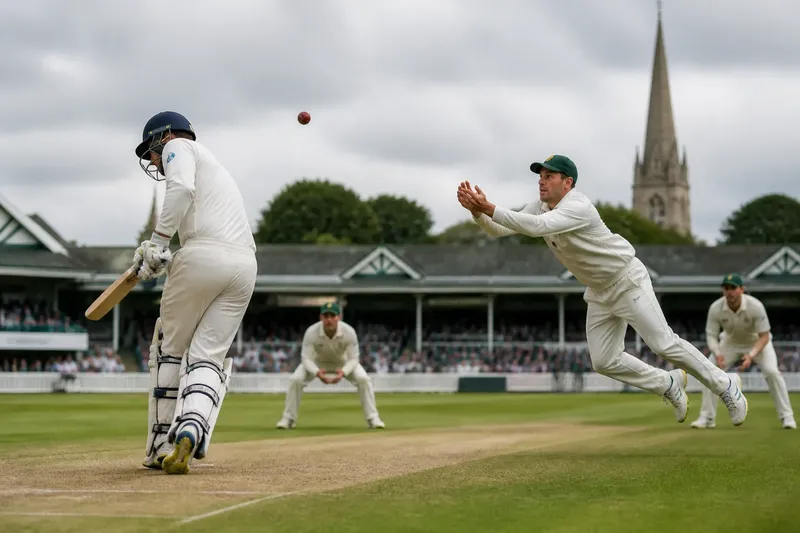
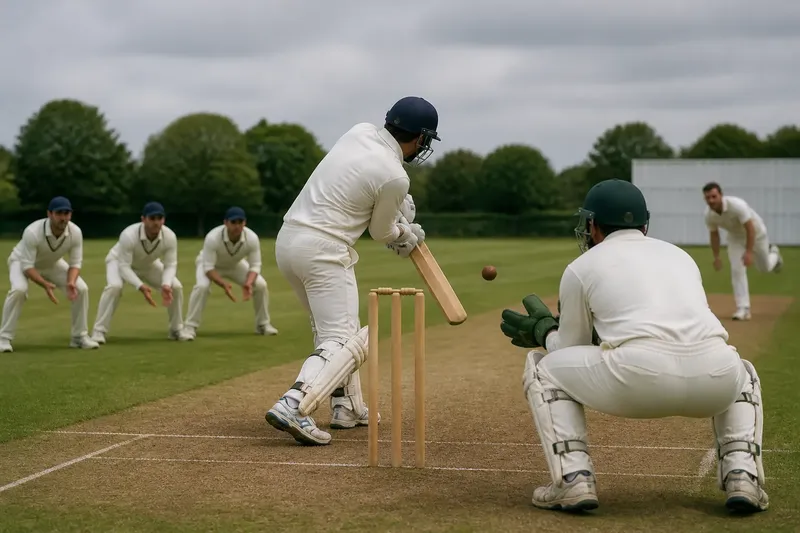
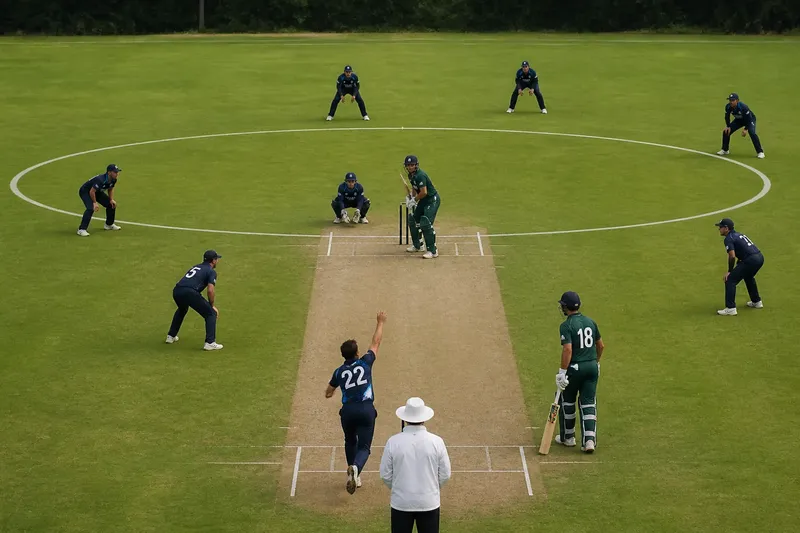
Start by looking at where the fielders stand. A catcher close to the bat may be positioned for an edge or a defensive mistake; a fielder near the boundary may be protecting against a particular scoring shot. Field settings are clues, not proof of what the captain intends.
Watch for movement after a delivery or a short sequence of similar shots. If a batter keeps steering the ball into a gap, the captain may close that area or move a fielder to the boundary. You can then see whether the batter adjusts or continues to target the same space.
Keep a simple note: “The captain moved a fielder to cover the cut shot.” That describes an observable change without needing to know every position’s name.
How do bowling changes shape a session?
A new bowler can alter the angle, pace or type of challenge facing the batter. A fast bowler may try to make the batter play at deliveries outside the body, while a spinner may invite a forward defensive shot or tempt a risky sweep. The exact plan becomes clearer by watching a sequence, not a single ball.
Notice where the bowler releases the ball from and where it pitches. A change of angle can make a familiar line feel different, while a spinner may vary flight and turn to test the batter’s judgement. Commentary can help identify a technique, but the ball’s path and the batter’s response are visible clues too.
For one spell, choose a single question: is the bowler trying to make the batter play, or encouraging them to leave the ball?
What should I look for during a new batter’s first spell?
A new batter often needs time to judge bounce, pace and movement. Watch whether they leave deliveries outside off stump, defend close to the body, or step forward to meet the ball. These choices help explain how they are trying to settle in.
Imagine a batter arrives after a dismissal while a fast bowler is working outside off stump. The batter leaves several balls, then begins defending closer to the body; the visible result is a shift from waiting for a safer line to protecting the stumps when the bowler comes straighter.
Do not treat one cautious over as a complete account of the batter’s approach. Look for a repeated choice before deciding that their method has changed.
Which details help me follow the contest?
Choose a few observable signals rather than trying to absorb every number on the screen. This list links each observation to a decision about what to watch next.
- Fielders near the bat: If catchers remain close, watch for edges and defensive mistakes; if they move away, look for a plan focused more on controlling space.
- Boundary protection: If a fielder is placed deep where a batter has been hitting, watch whether the batter changes shot; if the batter keeps finding that area, follow the captain’s next field adjustment.
- Bowling angle: If a new bowler delivers from a different side of the wicket, compare the batter’s response; if the angle causes repeated awkward defences, keep watching that matchup.
- Line and length: If the bowler repeatedly targets the stumps, notice whether the batter plays forward or back; if deliveries keep passing outside off stump, watch for leaves or attempts to reach for the ball.
- Batting footwork: If the batter comes forward, look for a defensive or attacking purpose; if they retreat, watch whether they are making room or giving themselves time to judge bounce.
- Captain’s changes: If a fielder moves after a shot, compare the next delivery with the new position; if the batter redirects the ball elsewhere, follow whether the field shifts again.
Use the commentary to name what you see, then return your attention to the ball. A short sequence often explains more than an isolated statistic.
How can I follow a Test match if I dip in and out?
When you return, check the innings, the batters at the crease and the current bowler. A scorecard supplies those basics; the broadcast can then show whether the field or bowling combination has changed since your last visit.
Pick one contest to follow, such as a new batter facing a spinner or a captain protecting the leg side. When you leave, note the last visible change: a bowler switched, a fielder moved, or the batter began using their feet.
Say you return after tea and see a left-arm spinner bowling to a right-handed batter, with a close catcher on the leg side. Watch whether the batter steps out or stays back; if they advance and drive, the bowler may shorten the next delivery, while a defensive response may lead the bowler to keep inviting a forward stroke.
What questions do first-time Test viewers ask?
Why does a bowler keep delivering in the same area?
Repeated deliveries can make the batter decide whether to defend, leave or attack, and can expose a weakness in footwork or judgement. Watch for the batter’s response across several balls before deciding what the bowler is trying to create.
Why does the captain move fielders between deliveries?
A fielder may move to cover a gap, protect against a shot or offer a catching chance. Compare the new position with the batter’s recent choices to see which possibility the captain appears to be addressing.
What is the difference between pace and spin bowling?
Pace bowlers rely chiefly on speed, bounce and movement through the air or off the pitch. Spin bowlers impart rotation, which can change the ball’s direction after it lands; watching the batter’s footwork helps you see how they handle each style.
Do I need to know every fielding position?
No. Begin by noticing whether fielders are close to the bat, in the ring or near the boundary, and whether they move after a shot. Those broad locations are enough to follow many changes in a bowling plan.
How can I keep a simple viewing note?
Write down the session, the bowler and batter you are watching, one field setting and one response. For example: “Afternoon session; spinner to new batter; close catcher on the leg side; batter steps forward to defend.” The note gives you a clear starting point when play resumes or you tune back in.
For a first Test match, the most useful habit is to follow one visible contest at a time. The ball’s line, the batter’s movement and the captain’s field changes offer enough detail to make each spell readable, even if you do not know every term on the scorecard.