From Timeless Matches to the One-Day Game
Compare timeless and one-day cricket to see what limits each contest, how teams adapt and how delays or unfinished play affect the result.
Timeless cricket and one-day cricket set different limits on a match: one has no preset closing day, while the other gives each side a fixed allocation of overs. That difference shapes team tactics and helps explain when a contest can be completed.
What does a time limit actually limit?
In a time-limited match, the schedule sets a boundary on available playing time, such as a stated number of days. Teams still try to score runs and dismiss batters, but play may end before every innings is complete. The competition’s conditions determine how that affects the result.
Historically, a timeless match had no preset final day. That did not mean it had to continue until a winner emerged: weather, other interruptions, match conditions or an agreed limit could affect its completion, and an inconclusive result was possible. “Timeless” describes the absence of a scheduled closing day, not a promise that play would continue indefinitely.
A time limit measures the time available for play; a one-day innings is bounded by its allotted overs. In either format, the precise arrangements depend on the rules and playing conditions for that match.
How does a one-day match set its boundary?
In one-day cricket, each team receives a stated maximum number of overs for its innings, subject to the competition’s playing conditions. An over is completed with a set of legal deliveries; wides and no-balls do not count as legal deliveries towards completing it. Interruptions can alter the allocation under the applicable rules.
The batting side’s innings ends when it uses its overs, is dismissed under the relevant conditions, or reaches the target while batting second. The chasing side must score enough runs before its innings ends; it need not use every available over.
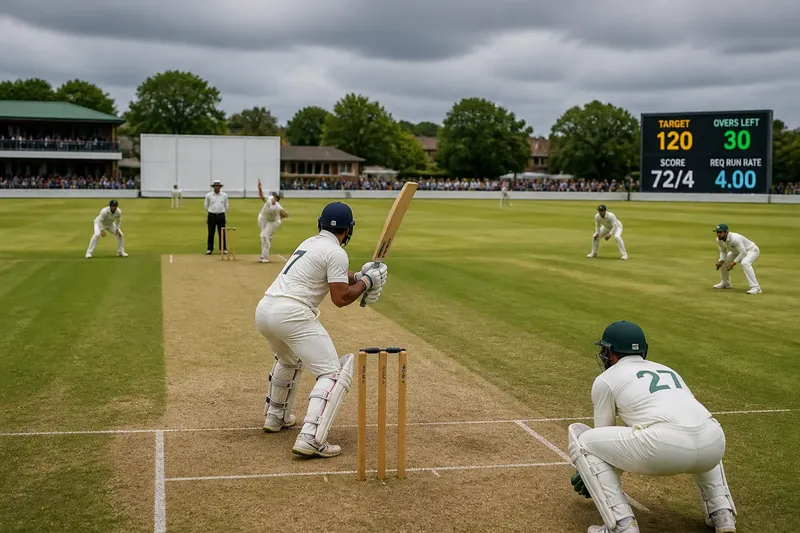
The scoreboard can show the target and overs remaining, helping viewers judge the chase alongside wickets in hand. Those overs are the remaining allowance, not extra time that can be saved for later.
Why do the limits change the way teams play?
In a fixed-overs innings, batters weigh scoring against the risk of losing a wicket. A cautious start may preserve wickets, but it uses deliveries that cannot be recovered. As the innings nears its end, a team may take greater risks because unused overs have no value once the innings closes.
In a match limited by days, a team may need to score quickly enough to leave time to dismiss its opponent. A captain’s decisions about declarations, batting order and scoring pace can affect how much time remains for the other side to respond.
Imagine a side batting second in an invented one-day match: its target is 120 runs, it has 30 overs left, and four wickets have fallen. These hypothetical figures give the captain a choice between protecting the remaining wickets and pressing the scoring rate. If the side is far behind the required pace, the captain might send in an aggressive batter; the observable result would be a faster attempt to close the gap, with a greater chance of losing another wicket. If the pace is adequate, the side might preserve wickets and continue a measured chase.
The score, wickets, pitch, weather and match situation all affect that choice. The format sets the boundary; teams decide how to use the time or overs available.
What happens when the scheduled time runs out?
A time-limited match may end without a winner if neither side has completed the work needed for a result before play ends. A draw means there is no decisive result under the match conditions; a tie means the scores are level in a completed contest, subject to those conditions. Delays can reduce the playing time and affect the prospects of reaching a result.
One-day cricket is organised around a limited overs allocation. If weather or another interruption cuts into play, the competition’s rules determine whether overs or targets change and how the result is decided. The original overs figure may no longer describe the match after a delay.
A competition may provide a reserve day or other arrangements for interruptions. These provisions do not make the match timeless: its overs limit remains part of the format, while the schedule and playing conditions explain how the contest can proceed.
How should you read the format while watching?
Ask what resource is running out. In a one-day innings, it is the batting side’s overs; in a match limited by days, it is the time available to complete the contest. That distinction helps explain why the same score can mean different things in different formats.
- Check the innings limit: If the scoreboard or playing conditions show a set overs allocation, then treat it as the innings’ maximum; if an interruption has changed it, use the revised allocation instead.
- Read the chase: If the runs required are large relative to the overs remaining, then expect pressure to score faster; if the required pace is manageable, a batter may prioritise keeping wickets in hand.
- Watch the match clock: If little playing time remains in a time-limited contest, then consider whether both sides can complete the work needed for a result; if not, an inconclusive finish may be possible.
- Notice the strategic deadline: If a team needs time to bowl its opponent out, then scoring pace may matter before the final session; if the batting side is protecting a position, it may instead use time to reduce the opponent’s opportunity.
- Check the result conditions: If the scores are level in a completed contest, then check whether the conditions record a tie; if play ends without a decisive result, the outcome may be a draw instead.
- Look for interruption rules: If rain or another delay has stopped play, then check for a revised overs allocation, target or reserve-day provision; if none applies, follow the competition’s stated procedure for an unfinished match.
A match does not always end because every batter is out, and a total cannot be understood fully without knowing the format. Follow the resource that is running out, then check the competition conditions for how that boundary affects the result.
What do viewers often ask about timeless and one-day cricket?
Is a timeless match the same as a Test match?
No. Test cricket is played under a time-limited format with a scheduled number of days. A timeless match has no preset closing day, although its conditions may still address interruptions or an inconclusive finish.
Can a one-day match finish before all the overs are used?
Yes. An innings may end because the batting side is dismissed or because the side batting second reaches its target. The overs figure is a maximum allocation, not a requirement to use every delivery.
Does a draw mean both sides scored the same number of runs?
No. A draw means the match ended without a decisive result under its conditions. A tie means the scores are level in a completed contest, as defined by those conditions.
Why can a one-day match have fewer overs than planned?
Rain or another interruption can reduce the time available for play. The competition’s playing conditions determine whether the overs or target are revised and how the result is decided.
To understand the difference between timeless and one-day cricket, keep one distinction in view: one format has no preset closing day, while the other gives each side a defined supply of overs. The relevant limit makes the score, tactics and possible finish easier to interpret.
Before a match begins, check the playing conditions as well as the scoreboard. For timeless and one-day cricket, those rules clarify how interruptions, innings endings and unfinished play affect the contest.