Why a Batter Can Be Out Without the Ball Hitting the Stumps
Why can a batter be out without the ball hitting the stumps? Learn how bat contact, a clean catch and boundary rules determine a caught dismissal.
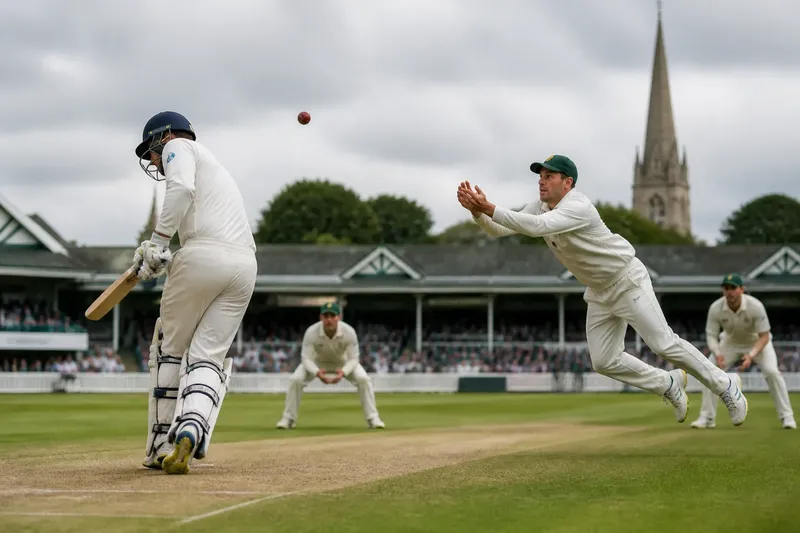
A batter edges a rising delivery, and a slip fielder takes the ball before it reaches the ground. The stumps remain untouched, but the striker may still be out caught. To understand why a batter can be out without the ball hitting the stumps, follow the bat contact, the catch and—if the ball reaches the boundary—the fielder’s position.
Why can a batter be out without the ball hitting the stumps?
A caught dismissal is possible when the ball touches the striker’s bat, or a hand holding the bat, and a fielder completes a catch before the ball touches the ground. The ball does not have to hit the wicket: the catch itself is the basis for the dismissal.
The ball might loop towards a close fielder, travel sharply behind the batter or rise high after an edge. Its speed and direction do not decide the matter. The relevant sequence is whether there was qualifying contact, whether the ball touched the ground, and whether the fielder completed the catch within the boundary rules.
When watching, trace the ball back to the point where its direction or speed changes. That can help you spot a faint edge, though sound or movement alone does not settle the decision.
What counts as contact with the bat?
The ball need not hit the flat face of the bat. An edge or contact with the handle can count, as can contact with a hand holding the bat. A ball that only touches the batter’s body or clothing has not touched the bat for a caught dismissal.
A fielder can catch a ball that has brushed the batter’s pad or clothing, but that alone does not make the striker out caught. Other dismissal rules may be relevant, depending on what happened; they are separate from the caught rule.
Sound can be a clue, not a verdict. A click may come from bat contact, but it may also come from the ball hitting a pad or another object, so the umpire considers the available evidence.
When is a catch clean, and what changes at the boundary?
The ball must not touch the ground before the fielder completes the catch. A ball that bounces on the turf and is then picked up has not been caught. A fielder may stumble or fall after securing the ball; that does not by itself cancel a catch if the ball remains under control and the catch is completed according to the laws.
Near the boundary, control is not the only issue. A fielder must not be touching the boundary or the ground beyond it while in contact with the ball. A fielder who is airborne outside the boundary may make a legal contact with the ball only within the specific boundary-catch provisions: among other requirements, the fielder must have been grounded inside the boundary before first touching the ball, and must not touch the ball again while airborne or grounded beyond the boundary. The law also limits how many such airborne touches are permitted before the ball is grounded inside the field.
These conditions make a boundary catch different from simply asking whether the fielder held the ball. If the fielder touches the boundary or the ground beyond it while holding the ball, the delivery is generally called a boundary, rather than a caught dismissal; the exact outcome follows the applicable Laws and playing conditions.
How do bat contact and a clean catch fit together?
Both requirements matter: qualifying contact with the bat or a hand holding it, and a completed catch before the ball touches the ground. A clean catch without bat contact is not a caught dismissal, and bat contact followed by a bounce is not one either.
Say a batter makes a faint edge and a slip fielder cups the ball before it reaches the turf. The stumps are untouched, but the striker is out caught if the umpire is satisfied that the edge and catch meet the rules. If the same ball lands first, the catch condition is absent, so the striker is not out caught.
Imagine instead that the ball brushes the batter’s sleeve without touching the bat or a hand holding it, then a fielder catches it cleanly. The catch is complete, but the required contact is missing, so the striker is not out caught.
What questions help settle a disputed catch?
Can a batter be caught off the glove?
Yes, if the ball touches a hand holding the bat and a fielder then completes a legal catch. Contact with a hand that is not holding the bat does not count as bat contact for this dismissal.
Does the ball have to go straight from the bat to a fielder?
No. It may touch a fielder or an umpire after the bat and still be caught, provided it has not touched the ground and the catch is completed under the laws. A ricochet does not by itself rule out the dismissal.
Can a catch count if the fielder falls?
It can, if the fielder has control and completes the catch before the ball touches the ground. If the ball comes loose and reaches the ground first, the catch is not clean.
Who decides whether the batter is out?
The on-field umpire makes the decision, with any review process governed by the match’s playing conditions. A television review may help clarify bat contact, ground contact or a boundary touch, but the decision remains subject to the applicable Laws and conditions.
How can you read a catch more clearly as a viewer?
Separate the incident into three questions: did the ball touch the bat or a hand holding it, did it touch the ground before the catch was completed, and did the fielder comply with the boundary rules? This is more useful than judging only by the sound or the moment the ball disappears into a fielder’s hands.
For a boundary catch, watch the fielder’s feet and body as well as the ball. Check whether the fielder was grounded inside the boundary before first touching it, whether any later contact occurred while beyond the boundary, and whether the ball was controlled before landing.
The central idea behind why a batter can be out without the ball hitting the stumps is straightforward: qualifying bat contact and a legal, clean catch can dismiss the striker. At the boundary, add the fielder’s contact with the ground to that sequence; it can change the ruling even when the ball appears securely held.